About Us
Segyu Gaden Phodrang Monastery , Nepal
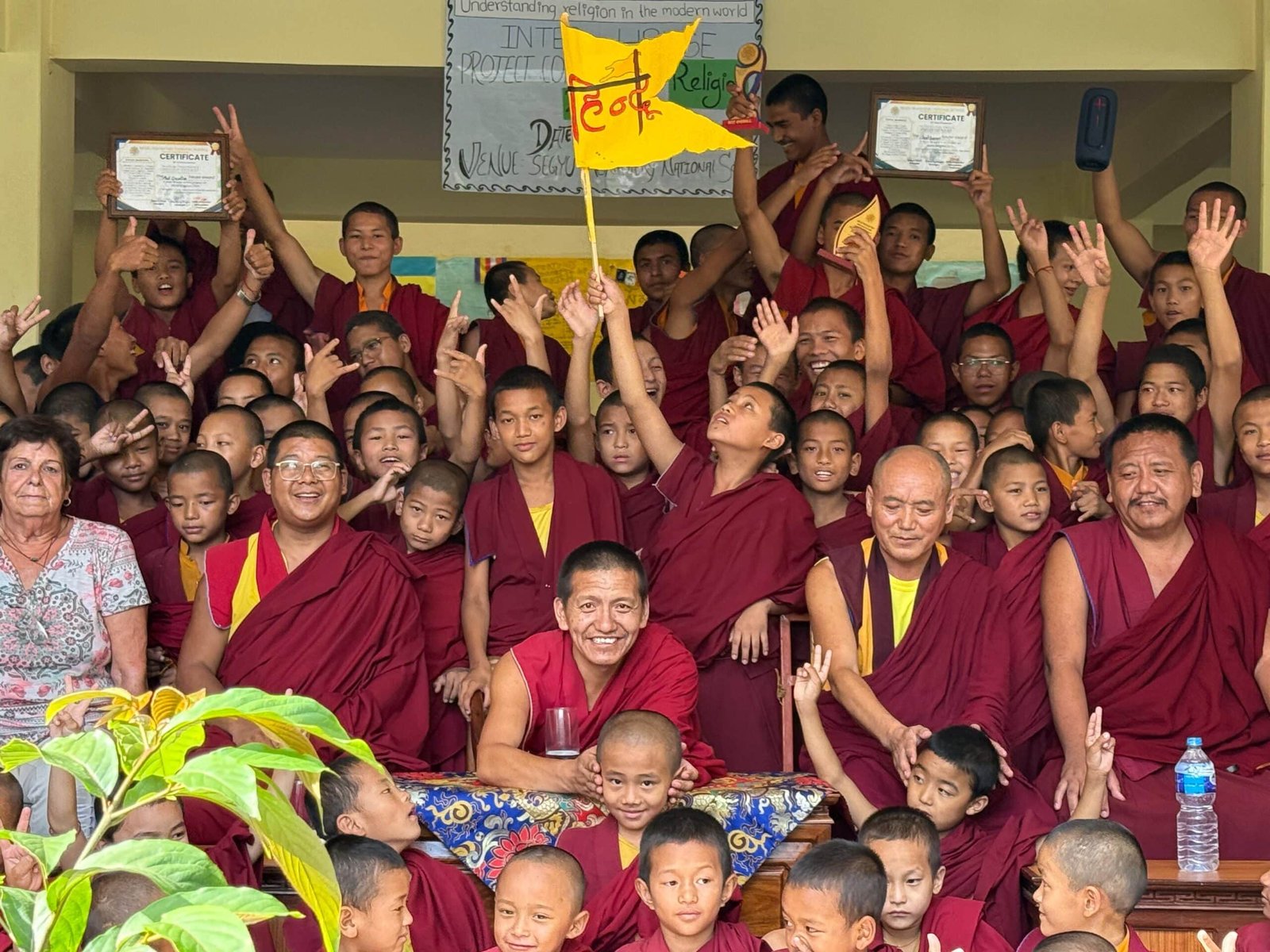
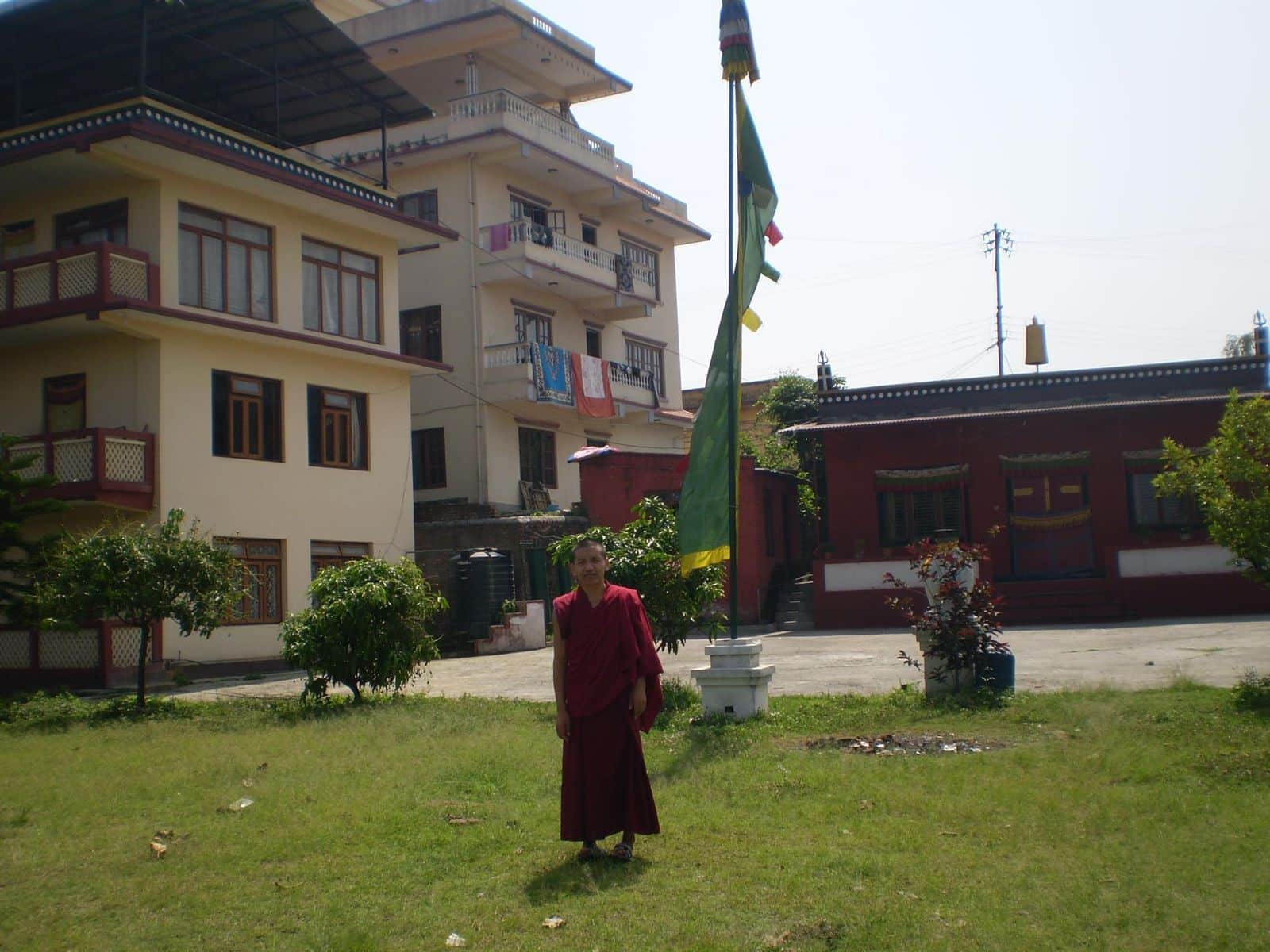
Segyu Gaden Phodrang Kathmandu branch, is an established Tibetan Buddhist Monastery with rich history of learned masters since its founding in 1432, Tibet. Since 1986, our Kathamandu branch has been established at Tinchuli, near Boudhanath. For those who are interested to find out more about a deeper meaning of life through the more profound Buddhist philosophy, or just curious to have a taste a little flavour of ancient Tibetan culture during one’s stay in beautiful Nepal, welcome to our humble abode.
May you have an enriching and memorable stay here.
Tashi Delek.
Our History
Today, Segyu Monastery stands as one of the most sacred and historically important Buddhist monasteries. Since its founding, it has faithfully upheld the unbroken lineage of Je Tsongkhapa, preserving his original teachings and pure tantric practices exactly as they were transmitted by the great masters. Known as the Segyu lineage, this rare and precious tradition is treasured for its clarity, purity, and complete integration of Sutra and Tantra.
As explained by Geshe Kelsang Gyatso, the essence of Je Tsongkhapa’s lineage is contained in the practice known as the Heart Jewel the union of the Guru Yoga of Je Tsongkhapa and the practice of his Dharma Protector, Dorje Shugden. This special practice nourishes and protects the practitioner’s spiritual life, enabling the swift attainment of realizations. At Segyu Monastery, this spiritual lifeline is maintained with the same care and devotion as it was centuries ago in Tibet.
Over the years, the monastery has also served as a stronghold for profound Vajrayana teachings such as Guhyasamaja, Heruka, and Yamantaka. As it grew, Jestun Sherab Sengge traveled to central Tibet and founded the Lower Tantric College, making Segyu Gaden Phodrang the origin of both the Upper and Lower Tantric Colleges.
After the 1959 exodus from Tibet, only forty monks from the original Segyu Monastery successfully fled to Kalimpong, India, via Gangtok. They faced great hardship—some sent to labor on road construction by the newly formed Tibetan Government in Exile, while others stayed to perform religious rites for the local community.
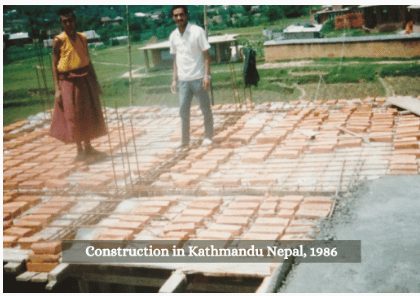
In 1986, faithful sponsors in Nepal offered the monks a small piece of land. A few rooms and a modest prayer hall were built, forming a branch of the Kalimpong monastery. In 1997, political circumstances led to a decision to become fully independent—a path we have followed ever since. At that time, the facilities were meager, yet the monks’ resolve remained firm. The three principal Pratimoksha vows were upheld, and the unique summer retreat rituals of Segyu Monastery continued exactly as they had been performed in the original monastery in Tibet.
1432 – The First Great Tantric Seat of the Gaden Lineage
The glorious Segyu Gaden Phodrang Monastery holds a unique place in Buddhist history as the first tantric monastery of the Gaden Lineage’s Great Secret Tantric Monasteries, established before the Upper and Lower Tantric Colleges of Central Tibet. According to ancient religious histories, the pure practice-tradition of the Segyu lineage has been widely spread and preserved throughout Tibet for centuries.
Founded in 1432 by Jetsun Sherab Sengge a direct disciple of Je Tsongkhapa the Great and his student Dulnagpa Palden Zangpo, Segyu Monastery was established to uphold and transmit the profound tantric teachings of Je Tsongkhapa, including the sacred Guhyasamaja practice. Je Tsongkhapa personally empowered Jetsun Sherab Sengge to be the holder of the Great Secret Tantra, presenting him with treasured blessings: a skullcup filled with inner offerings, a golden statue of Guhyasamaja, the renowned Four-in-One Commentary of Guhyasamaja, rare tantric texts, the mask of Dharmaraja, ritual dance costumes, and sacred implements.
Fulfilling Je Tsongkhapa’s prophecy, Jetsun Sherab Sengge brought the teachings to Tsang province under the patronage of Situ Sonam Pel and Dagmo Shakya Pel, attracting many eminent scholars. He instituted tantric rituals, study programs, and the transmission of Je Tsongkhapa’s authentic generation and completion stage practices. Among his notable students was Je Gendun Drup, the First Dalai Lama.
Under his leadership, the Upper Tantric College known as Segyu Monastery was established as a magnificent seat of Vajrayana learning and practice. He entrusted its care to Dulnagpa Palden Zangpo, ensuring the continuity of the unbroken Segyu lineage through generations of great Vajra Masters.
For over six centuries, Segyu Gaden Phodrang Monastery has remained the lifeblood of the Riwo Gaden (Gelug) tradition, preserving the pure tantric teachings of Guhyasamaja, Heruka, and Yamantaka, along with the rare Heart Jewel practice the union of the Guru Yoga of Je Tsongkhapa and the Dharma Protector Dorje Shugden exactly as passed down from master to disciple without degeneration.
Today, the monastery continues to uphold this living heritage, serving as a center for deep study, pure practice, and the flourishing of the Segyu lineage for the benefit of all beings.
Khen Rinpoche Jampa Tsundu — Reviver of Segyu Monastery in Nepal

The venerable abbot of Segyu Gaden Phodrang Monastery, Khen Rinpoche Jampa Tsundu, was born in 1938 in the village of Yago, in the Se region of Tibet. His family name is Lama Drupkhang, and he is a descendant of the great master Lama Samten Reypa. His father, Fa TshePhun, was a village Chief and very skilled in this capacity. His mother, Ma Pyasa lak, was a very kind and courteous lady.
Traditionally, the middle son is ordained as a monk in the Tibetan community. Fa TshePhun was told by an astrologer that it would be very fortunate karma for this son to become a monk, so Jampa Tsundu was ordained at 9. He excelled in all subjects and completed all his studies at age 15.
During the Chinese invasion of Tibet, Jampa Tsundu fled to India.For the next 20 years, this humble monk devoted his time to cooking for older monks, making Tibetan incense, and going to pujas at the newly founded Segyu Monastery branch in Kalimpong, India.
Venerable Abbot of Segyu Gaden Phodrang Monastery, Khen Rinphoche Jampa Tsundu, passed into parinirvana in 2022.

In 1979, at the advice of Kyabje Trijang Dorjechang; several other high Lamas; and at the request of the Segyu Monastery monks, Jampa Tsundu taught Dharma for the next six years. In 1985, he traveled to South India with the young Pemachoeling Tulku to receive teachings from Kyabje Zemey Rinpoche. Along with other high Lamas, he received many initiations (empowerments), transmissions, and explanations from his root Lama, Kyabje Trijang Dorjechang.
Jampa Tsundu began his journey to rebuild the original Segyu Monastery, which had been completely destroyed in Tibet.
He and his friend went to Dulnagpa cave (the cave of the great master Dulnag Palden Zangpo, where a naturally-appearing Yamantaka arose on the rocky face) to offer Tsog and pray. He then went to the Chinese regional office to discuss the monastery situation and apply for monastery reconstruction with the Chinese government.
In 1986, a sponsor offered land for new construction, and he traveled to Nepal to begin constructing the branch of Kalimpong Segyu Monastery.
It took several trips back and forth to Nepal. Still, finally, with the support of Drubwang Ganchen Rinpoche and other sponsors, they built the monastery prayer hall and some residential rooms for the monks. On his fourth visit, with the help of his faithful students, Gen Kalden and other monks, they spent the next three months performing Guhayasamja, Thirteen Deity Yamantaka, and Heruka Sadhanas, among other rituals.
Over the next few years, Jampa Tsundu also made several trips to Europe, Thailand, and Indonesia. In 2012, at the monastery’s request, he took Abbot’s position and responsibilities at this great monastery.


