
A Gyudchen — Great Vajra Master — is a holder of the throne of Segyu and of its tantric transmission. After Jetsün Sherab Sengge entrusted the monastery to his disciple, the tradition passed through a line of nine such masters over roughly two centuries.
The monastery’s records count them, together with Sherab Sengge himself, as a close lineage (nye brgyud) of ten realised masters who arose from Segyu and held its secret tantric instructions. The account below follows Zongtse Tulku Jampa Thupten’s History of Segyu Gaden Phodrang Monastery (1432–1959).
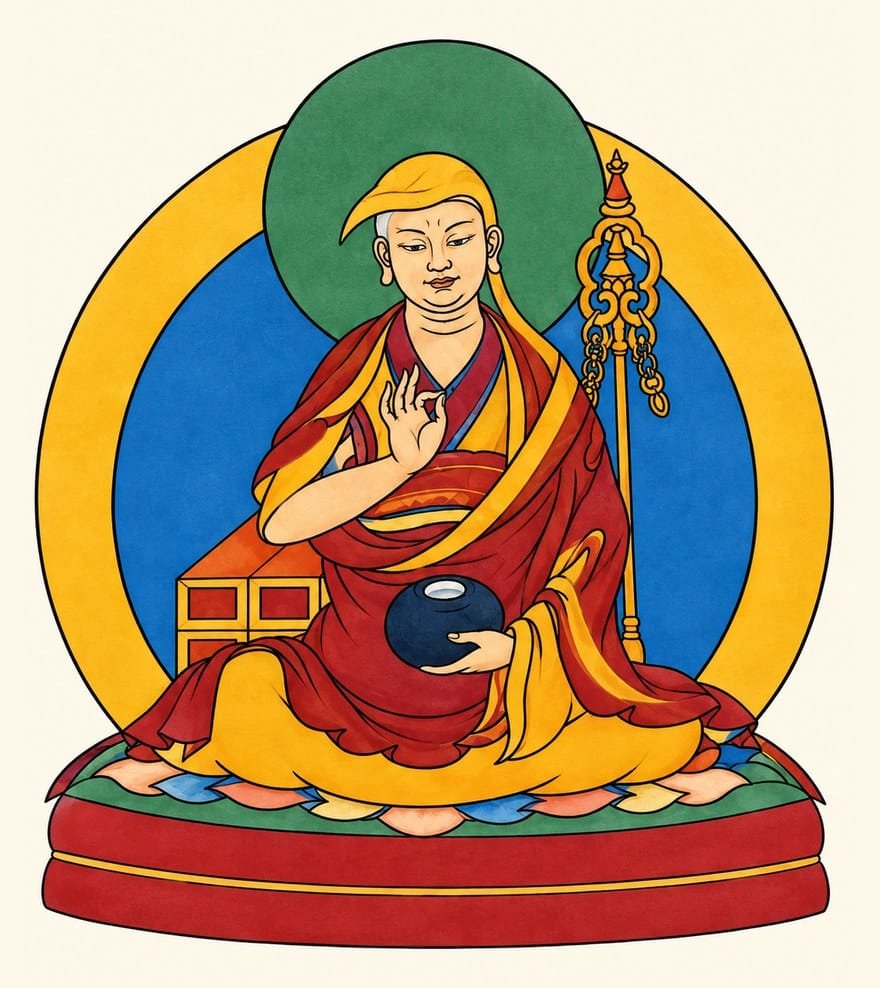
1. Bodhisattva Dulnagpa Palden Zangpo (1402–1473)
Born at Tanag Dhar in Tsang, Dulnagpa Palden Zangpo was the Dharma Regent of Jetsün Sherab Sengge and the founding abbot of Segyu. He was ordained by the abbot Drupa Sherab, from whom he also received the Kadampa pith instructions. Under the translator Samghashri he studied grammar, etymology, poetry and astrology, and he received teachings from Je Geden Drup, the master later recognised as the First Dalai Lama.
From Sherab Sengge he received the Root and Subsequent Tantras of Guhyasamāja, the Tantra Requested by the Four Goddesses, the Compendium of Wisdom Vajra and their commentaries — the transmission Segyu was founded to preserve.
Independent accounts add that he took ordination at Narthang, that he composed the Hundreds of Deities of Tuṣita in connection with Je Tsongkhapa’s Migtsema prayer, and that he was known for healing the sick through prayer. He is also remembered for subduing the spirit Pehar, then afflicting the Se district, binding it not to harm those who recite the Migtsema — an episode told in full on the Segyu lineage page.
He died in 1473 in the area of Dritsam, leaving disciples who carried the tradition forward, among them Chosje Rogtsopa Ngawang Dragpa, Gedun Phelpa and Dorjechang Tashi Phagpa. Read his full account.
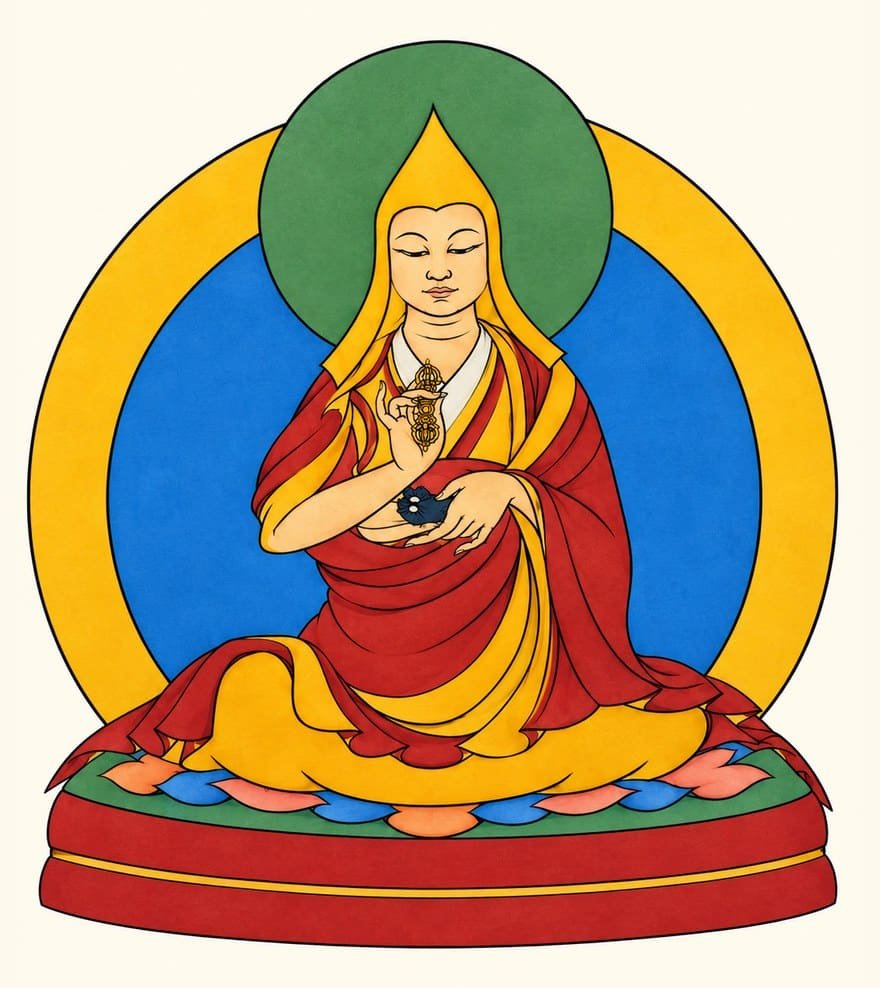
2. Gyudchen Jamyang Gedun Phel
An elder kinsman (dbon po) of Dulnagpa Palden Zangpo, Jamyang Gedun Phel went to Gaden after Dulnagpa’s passing. There, at the feet of Chosje Lodoe Choskyong — the fifth Gaden Throne-Holder — he received the tantric commentaries to the Root Tantra of Yamantaka and the practices of the Exposition of the Mystic Wheel.
He commissioned most of the objects of worship for the Tantric Hall and the Mahākāla chapel, and succeeded to the throne of Segyu after Chosje Rogtso Ngawang Dragpa. For many years he taught the great commentaries and their supplements, and was regarded by Ton Paljor Lhundrup and others as an authority on the Segyu instructions — a judgment the First Jamyang Zhepa, Ngawang Tsondue, later confirmed.
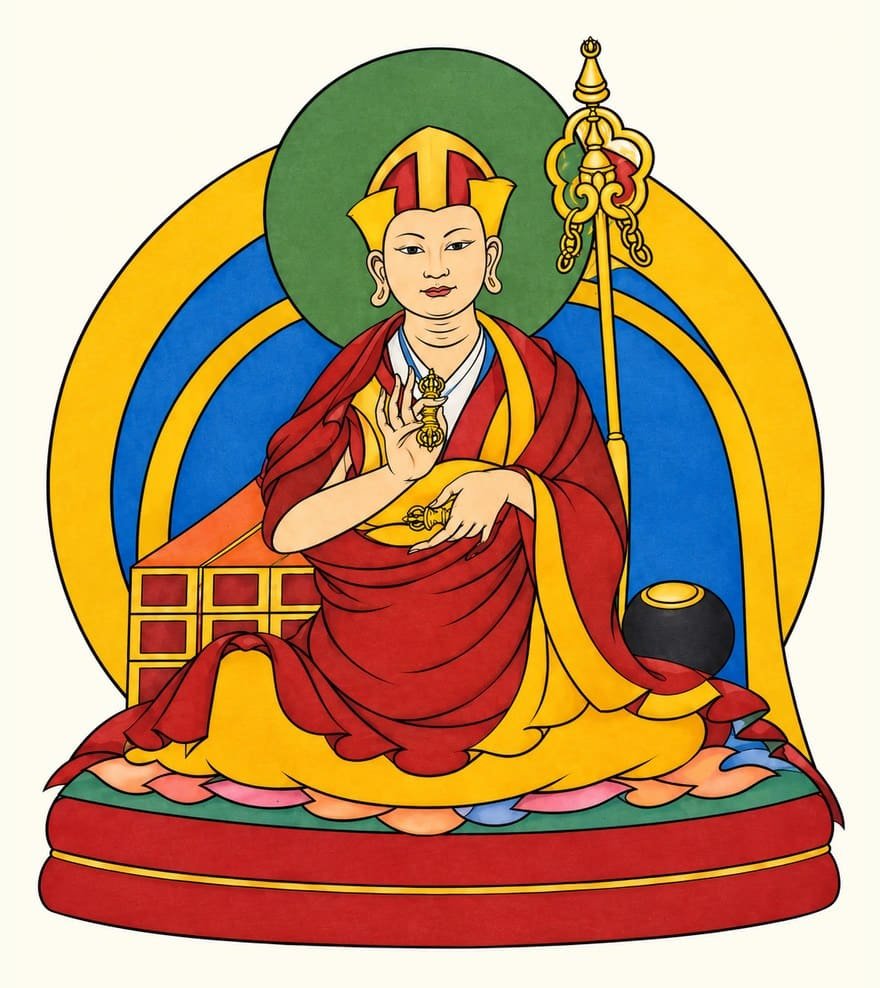
3. Dorjechang Tashi Phagpa
Tashi Phagpa relied on many masters of Sutra and Tantra, above all on Dulnagpa Palden Zangpo and on his elder kinsman Gyudchen Gedun Phel, whom the records say he followed in both thought and action. He studied the Secret Tantra thoroughly, and his command of the words and meanings of the four classes of Tantra drew the faith of learned scholars, who are said to have praised him with a sound like summer thunder.
He was a prolific author, composing manuals (yig cha) on the generation and completion stages, sadhanas and liturgical texts, rituals of the mandala, and a General Presentation of Tantra. His portrait in the monastery’s records names him Gyudchen Tashi Pel, a Vajra Holder.
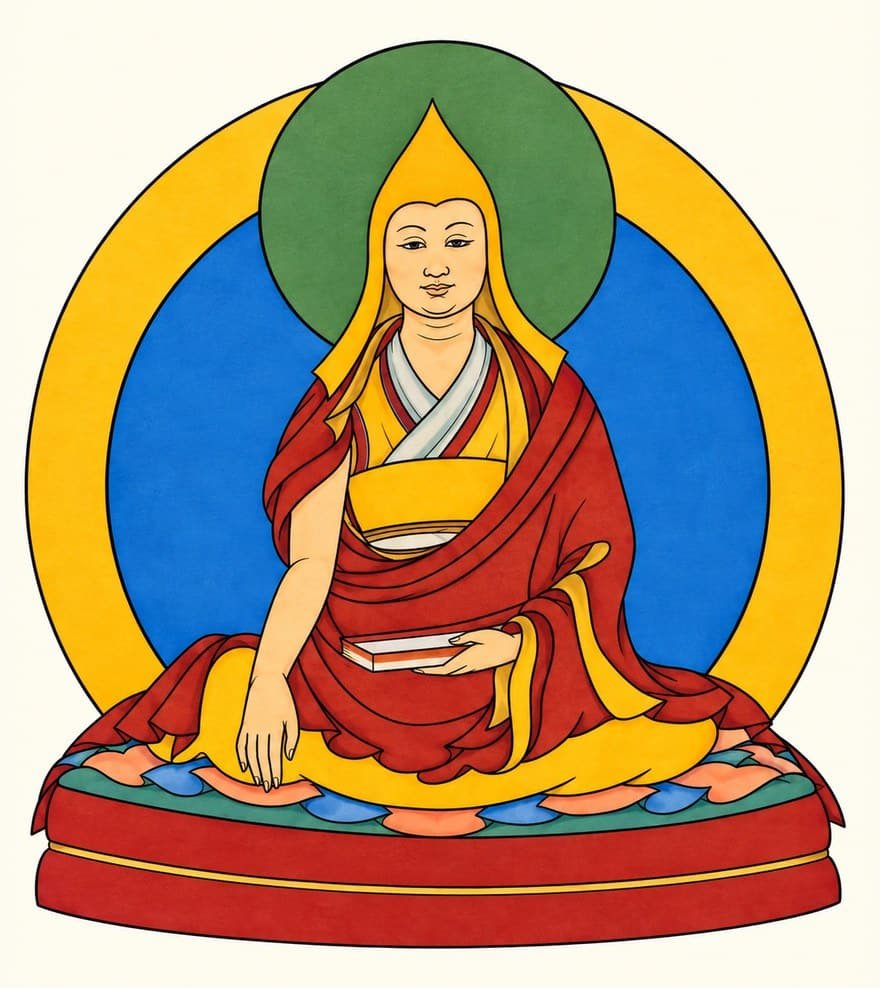
4. Gyudchen Samdup Gyatso
Born at Lhunpo Tse in Tsang, Samdup Gyatso studied metaphysics at Gangchen Chosphel and pursued grammar, poetry and other fields at Narthang and elsewhere. His reputation as Panchen — great scholar — is said to have spread in all ten directions, and he was held to be an incarnation of Dulnagpa Palden Zangpo.
He left many works on Sutra and Tantra, and his verse interpolations in the General Presentation of Tantras were admired for their eloquence. In teaching the tantric commentaries he followed the tradition of the masters before him exactly. He became abbot not only of Segyu but of Shabtoe Lhunpo Tse, teaching both the extensive and the profound aspects of Sutra and Tantra.
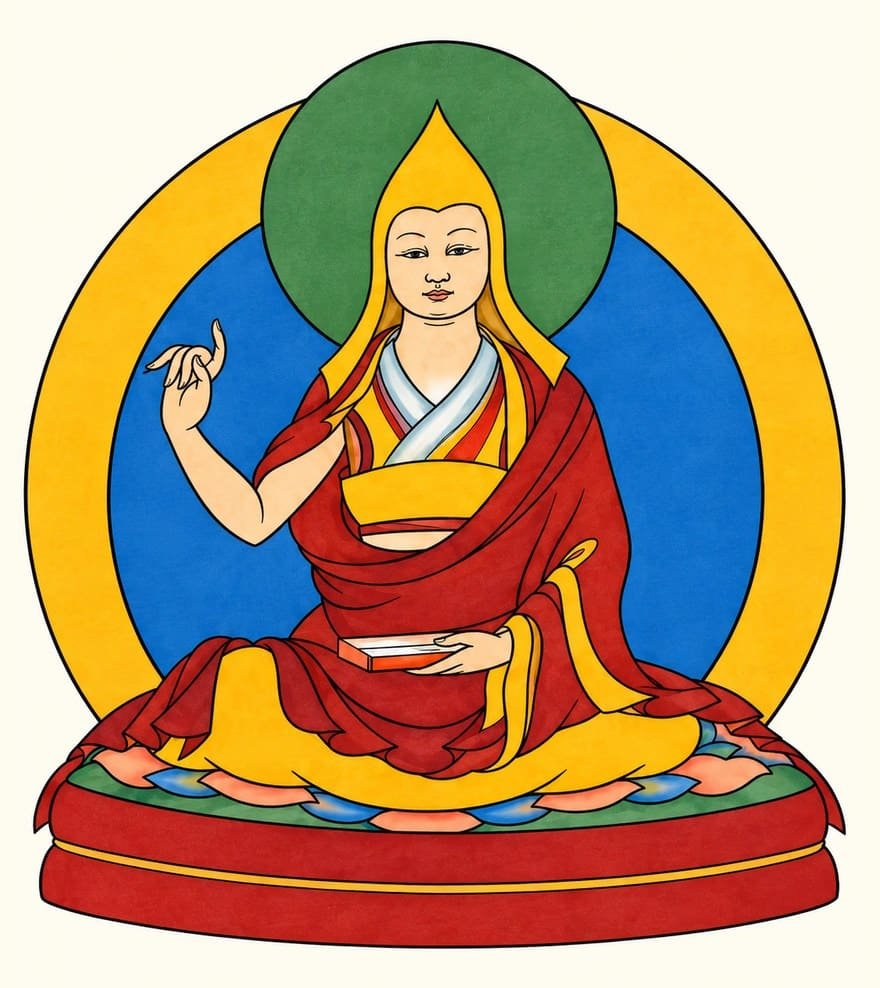
5. Gyudchen Tsondue Phagpa
Also born at Lhunpo Tse, Tsondue Phagpa was ordained young and travelled to Central Tibet, studying under many teachers until he was recognised as a great scholar. At the Lower Tantric College he received the complete tantric commentaries from Dorjechang Choskyong Gyatso, that college’s eighth lineage master, and served there as Dedication Master and, it appears, as Lama Uze — vice head lama.
Returning to Lhunpo Tse, he called on Panchen Samdup Gyatso at Segyu and told him what he had received in Central Tibet. Samdup Gyatso, delighted, invited him to stay. At Segyu he received further teachings and empowerments from Dorjechang Tashi Phagpa, and Samdup Gyatso later named him his successor with a play on his name — that Tsondue Phag must generate tsondue, enthusiastic perseverance.
His tenure was not untroubled. A prominent local family, angered that their son had not been made successor, pelted Segyu monks with stones when they came to Dritsam for a Dharma session, striking even the Gyudchen’s horse. He directed the ritual of sixty cakes against them; they answered by engaging a tantrika who hung a HUM and a yak’s head on their walls. His response was blunt — if they thought that would stop his Dharmarāja, they should watch — and the records say the matter was settled.
From him originated the combined lineage of teaching and commentary of the Segyu and Megyu traditions. He is said to have departed for Tuṣita with many wondrous signs.
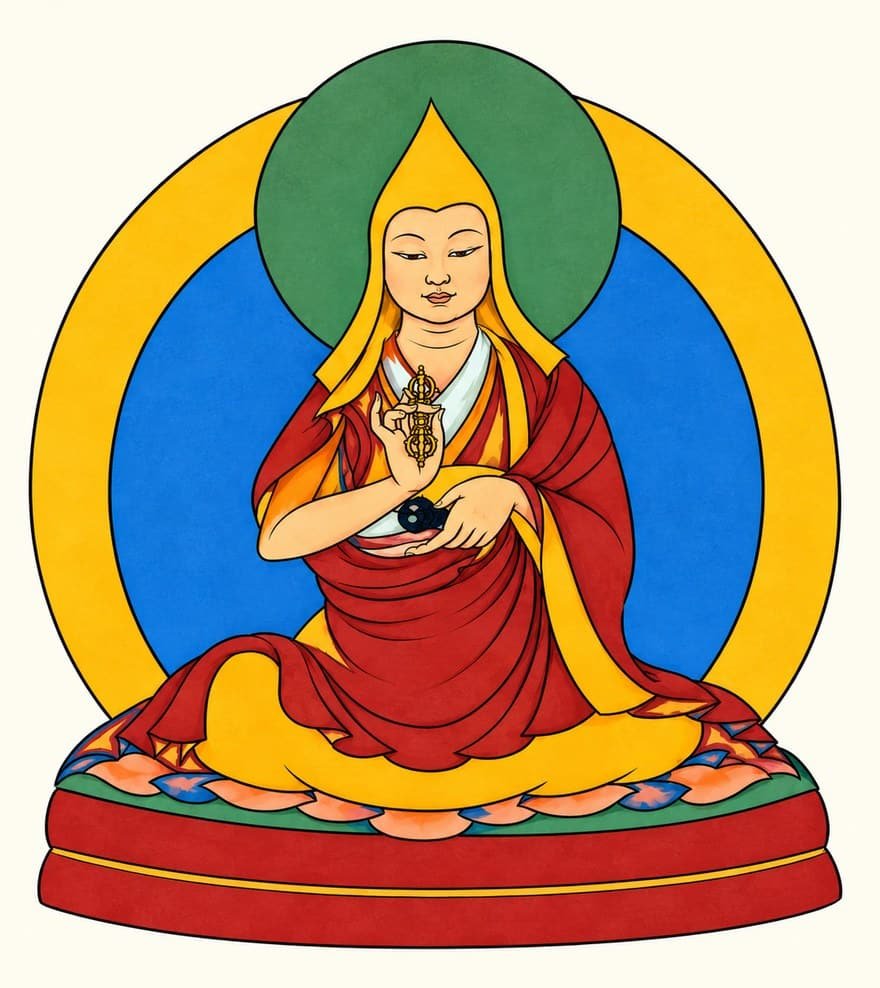
6. Gyudchen Dorje Zangpo
Born at Wangden, Dorje Zangpo took ordination and left home for the homeless life. At Gangchen Chosphel he studied and contemplated the Three Baskets extensively, then joined Segyu, where he received the Tantras of Guhyasamāja, Heruka and Yamantaka with their commentaries and pith instructions, the eight great commentaries, and teachings on the Graded Path and the Profound View of the Middle Way. He became an eminent master-scholar and succeeded to the throne.
His disciples included three who became masters in their own right — Sangye Gyatso, Konchog Gyatso and Tsechen Jampa Gyatso. The records credit him with such command of the two stages that Mahākāla and Dharmarāja assisted his practice: during one ritual-cake accomplishment of Mahākāla, when he invoked the deities, the cakes prepared for the retinue are said to have danced. A eulogy preserved in the monastery’s records commemorates it.
He later lived at Wangden, teaching that a human life is as fleeting as a shadow cast by the sun.
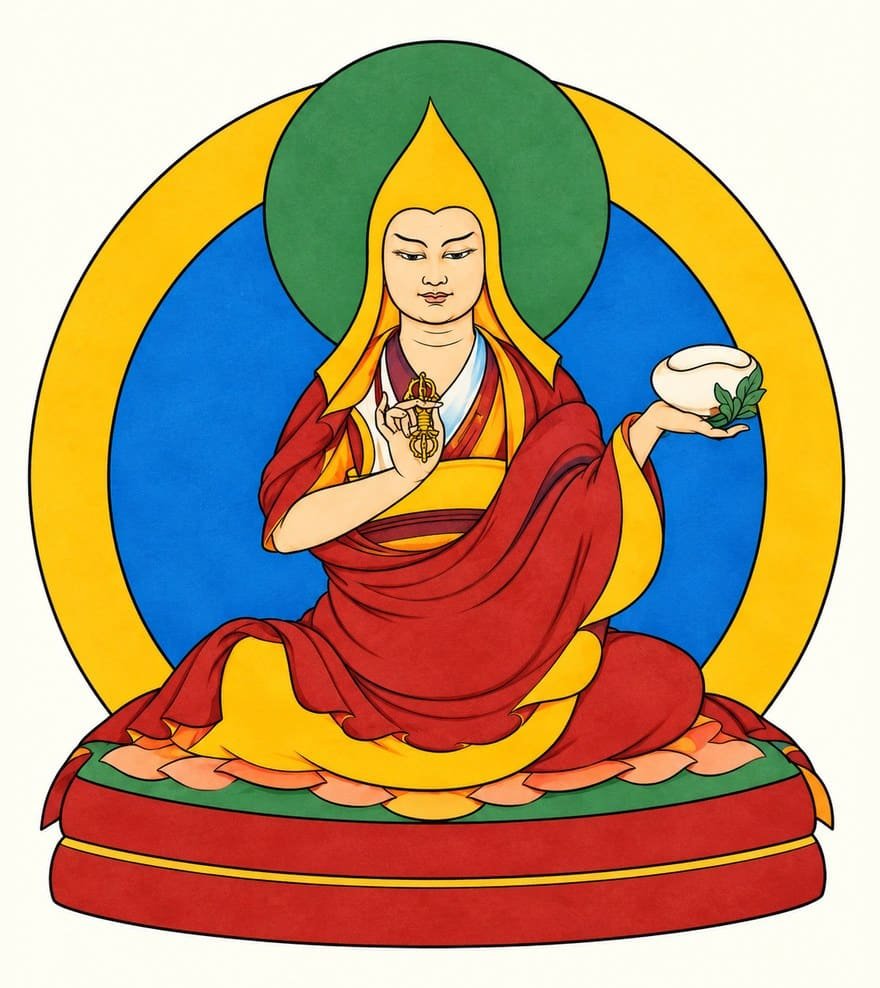
7. Gyudchen Sangye Gyatso
Sangye Gyatso was recognised as a yangtul — the incarnation of an incarnation — of Dulnagpa Palden Zangpo. Drawn to the Dharma from childhood, he captivated learned scholars with his exposition and composition, and in time succeeded to the throne of Segyu.
His most consequential student was Panchen Lobsang Choskyi Gyaltsen, the Fourth Panchen Lama, who received from him a great body of teaching — more than thirteen empowerments across the four classes of Tantra, including the Red and Black Yamantaka, Manjuvajra and the three systems of Yamantaka; Dorying and Paltse of the Yoga Tantra; Vairochanābhisambodhi and the Vajrapāṇi empowerment of the Performance Tantra; and the White Parasol among others.
The records do not smooth over his temper. Disturbed by a rift with Ngor monastery, he drew and buried a Wheel of Destruction — then, reflecting that no good could come of destroying so great a monastery, dug it up again. He served as abbot of Lhuntse and other monasteries, and died at fifty-one.
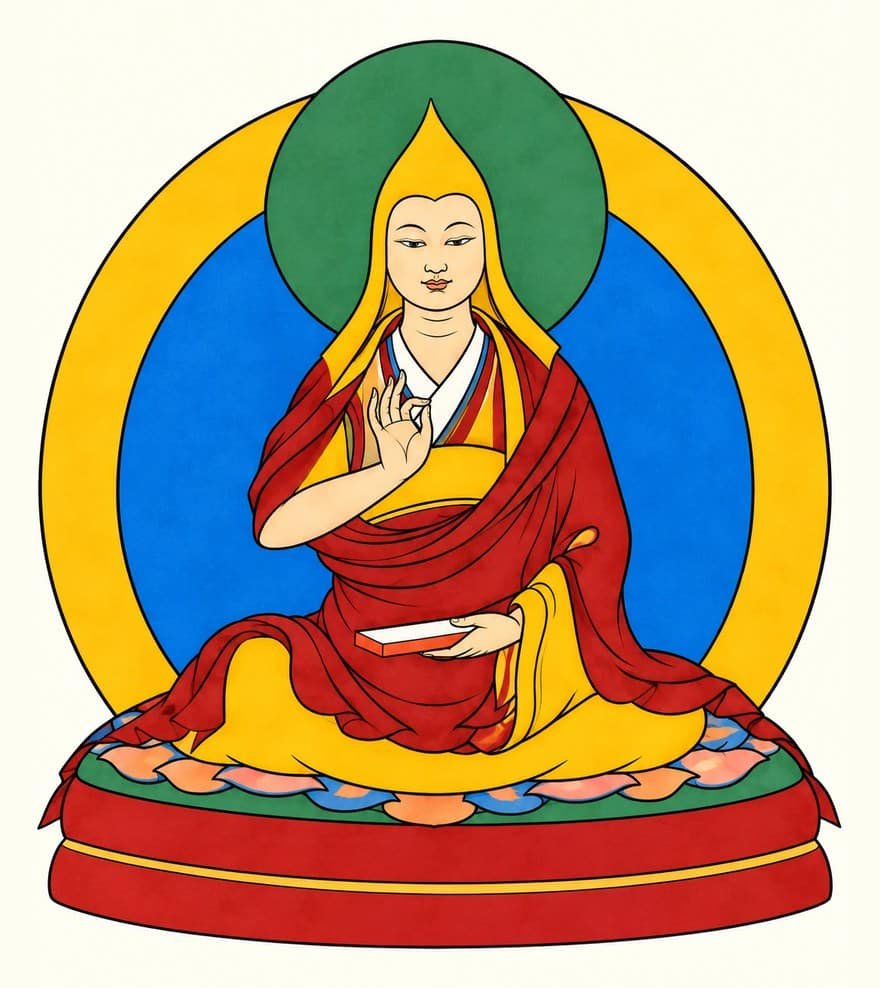
8. Gyudchen Konchog Gyatso (b. 1558)
Born at Wangden in Tsang in the Earth-Horse year, Konchog Gyatso entered Gangchen Chosphel monastery, and after ordination worked through Dharmakīrti’s Seven Treatises on Valid Cognition with the relevant Sutras.
He then came to Segyu, receiving teachings from Dorje Zangpo before taking Sangye Gyatso as his root guru. From him he received the empowerments and oral transmissions of Guhyasamāja, Heruka, Yamantaka and Kālachakra, together with the commentaries that make up the eight great commentaries — the five stages of Guhyasamāja, the two systems of Heruka after Lūyipa and Ghaṇṭapāda, the four serial yogas of Yamantaka, the six yogas of Kālachakra, Vajrapāṇi with the Great Retinue, the Six Yogas of Nāropa, and the Opening of the Golden Gate for the transference of consciousness.
While serving as attendant to Sangye Gyatso he also received the Sixty-Mystic Wheel of Yamantaka, the common and uncommon fire ceremonies of the four activities, and the four great rites for warding off obstacles. Holding that the Secret Vajrayāna could not be understood without the general fields of learning, he studied grammar, poetry, astrology and etymology, and became especially noted as an astrologer.
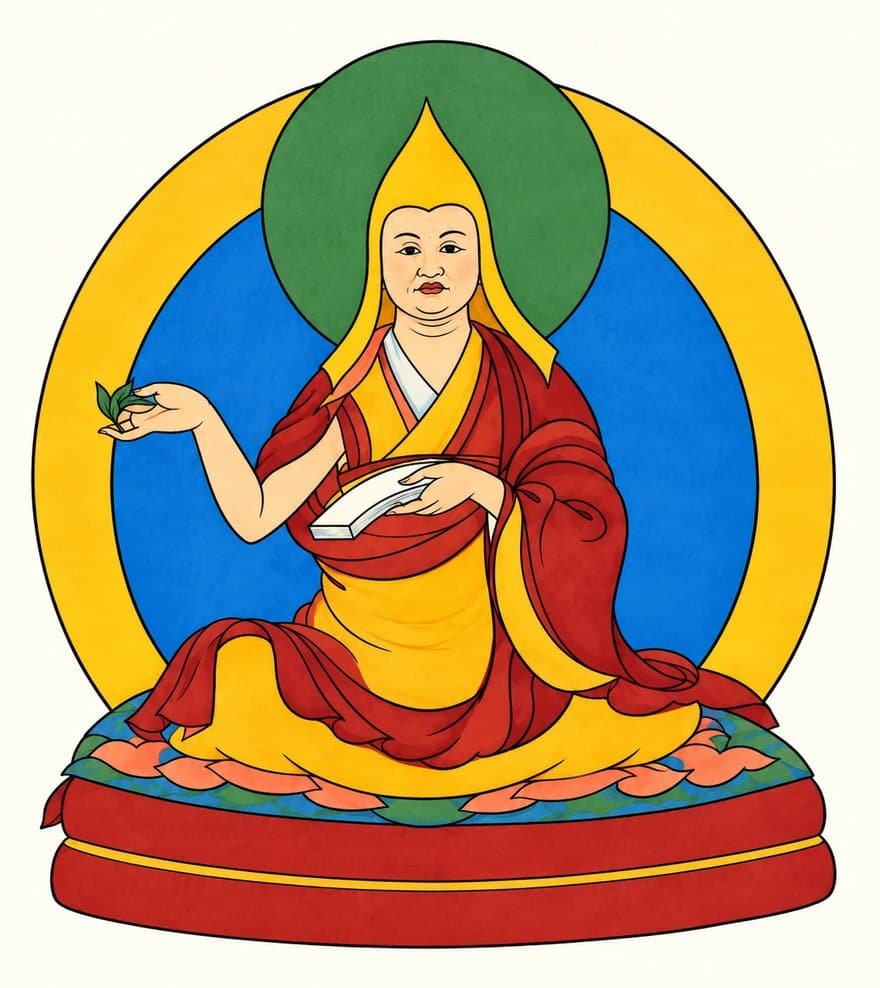
9. Gyudchen Dorjechang Könchog Yarphel (b. 1602)
Born at Nasbum in the Wangden district of Tsang in the Water-Tiger year, Könchog Yarphel is the last of the nine and, in the wider history of the Gelug tradition, the most consequential. He was ordained in 1609, at the age of eight, by his predecessor Gyudchen Konchog Gyatso — the eighth Gyudchen giving ordination to the ninth.
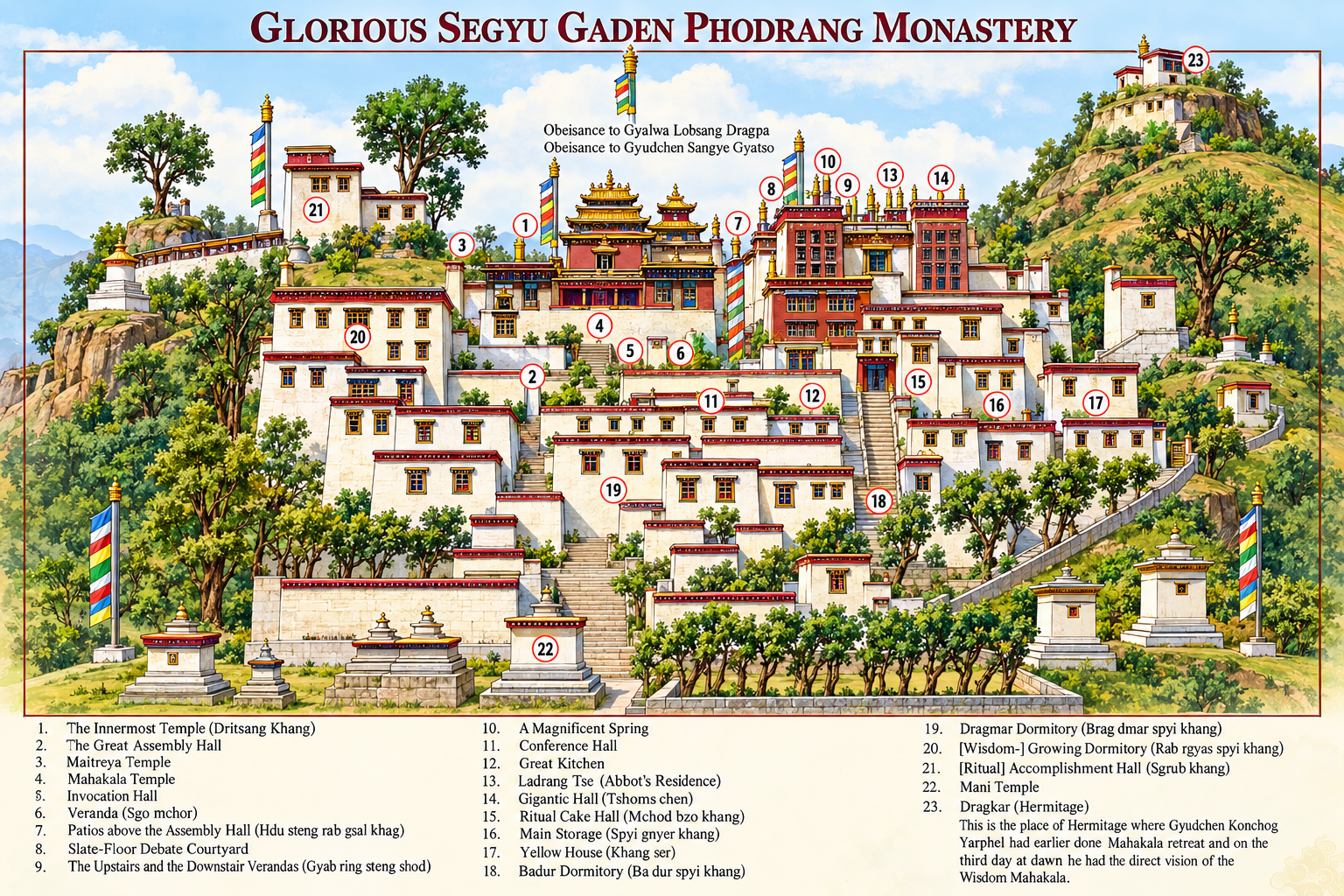
The monastery’s records place his Mahākāla retreat at the Dragkar hermitage on the ridge above Segyu, where on the third day at dawn he is said to have had a direct vision of the Wisdom Mahākāla.
It was Könchog Yarphel who conferred the Se lineage transmission on the First Jamyang Zhepa, and who asked him to establish a tantric college at the monastery he would later found. Jamyang Zhepa founded the tantric college of Labrang Monastery in Amdo in 1719 — so Segyu’s transmission, carried by the ninth Gyudchen, took root in one of the great monasteries of eastern Tibet.
The line since
The tradition these masters held did not end with them. It passed down through the abbots of Segyu in Tibet until 1959, and continues today at the re-established monastery in Kathmandu under its present abbot. The transmissions they preserved — Guhyasamāja, Heruka and Yamantaka — remain the heart of the Segyu lineage, and the monastery’s history records their work in full.
Sources and further reading
The account above follows the monastery’s own published history:
- Zongtse Tulku Jampa Thupten (Champa Thubten Zongtse), The History of Segyu Gaden Phodrang Monastery (1432–1959): A Wonderful and Meaningful Religious History of the Glorious Segyu Gaden Phodrang Monastery of Great Secret Tantric Teachings, trans. Tenzin Dorjee (Delhi: Aditya Prakashan, 1995), chapter 3, ‘Of the Nine Gyudchen’.
Several points are independently corroborated in published scholarship:
- Alexander Berzin, ‘Dulnagpa’ — Study Buddhism. Confirms Dulnagpa’s birth in 1402 at Tanagda near Tashilhunpo, his ordination at Narthang, his authorship of the Hundreds of Deities of Tuṣita, and the subduing of Pehar.
- Alexander Berzin, ‘Gelug Monasteries: Labrang’ — records Segyu Könchog Yarphel (1602–1682) conferring the Se lineage on the First Jamyang Zhepa, who founded Labrang’s tantric college in 1719.
- Treasury of Lives — Segyu Dratsang — describes Segyu as the first Geluk institution devoted to tantric practice.
Two differences between the accounts are worth noting. The monastery’s history gives Dulnagpa’s age at death as seventy-two, where Berzin gives seventy-one — a difference of Tibetan and Western age reckoning rather than of fact. And while scholarly accounts hold that Jetsün Sherab Sengge founded Segyu and entrusted it to Dulnagpa, a popular tradition credits Dulnagpa with the founding itself. The monastery’s own records follow the first.
Support the lineage
The transmissions these masters preserved are still held here by 130 young monks.
- Sponsor a monk — support a young monk’s education, food and medical care.
- Sponsor a puja — support the ritual cycle that keeps these transmissions in daily use.
- Make an offering — support the monastery wherever the need is greatest.